
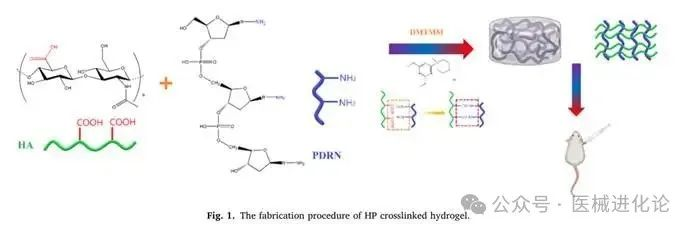
The structural confirmation of amino acid cross-linked sodium hyaluronate (Hyaluronic Acid, HA) requires comprehensive characterization through multiple analytical techniques to determine the cross-linking site, cross-linking degree, molecular weight change and chemical structure integrity. The following are detailed steps and methods:
1. Sample purification and pretreatment
Dialysis/ultrafiltration: remove unreacted amino acids, cross-linking agents and small molecule by-products.
Freeze-drying: obtain dry samples for subsequent analysis.
2. Chemical structure confirmation
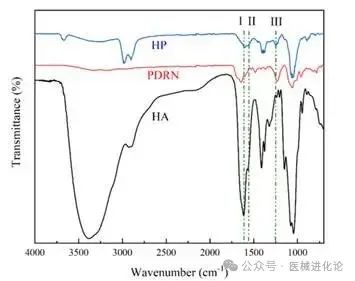
(1) Infrared spectroscopy (FT-IR)
Purpose: to confirm the formation of cross-linking bonds (such as amide bonds, ester bonds).
Characteristic peaks:
Sodium hyaluronate: carboxylate (COO⁻, ~1600 cm⁻¹ and ~1400 cm⁻¹), hydroxyl (~3400 cm⁻¹).
After amino acid cross-linking: new amide I band (C=O, ~1650 cm⁻¹), amide II band (N-H, ~1550 cm⁻¹) or ester bond (C-O, ~1730 cm⁻¹) are added.
(2) Nuclear magnetic resonance (NMR)
¹H NMR and ¹³C NMR:
Detect the proton/carbon signals of the HA backbone (glucuronic acid and N-acetylglucosamine).
Confirm the characteristic peaks of amino acids (such as α-H, side chain groups).
Cross-link bond signals (such as newly formed amide bonds or ester bonds).
Two-dimensional NMR (COSY, HSQC, HMBC): Assist in assigning cross-linking sites.
(3) Mass spectrometry (MS)
MALDI-TOF MS or ESI-MS:
Measure the molecular weight change before and after cross-linking to verify the degree of cross-linking.
Detect possible degradation fragments or by-products.
3. Cross-linking degree and molecular weight analysis
(1) Determination of cross-linking degree
TNBS method (trinitrobenzene sulfonic acid): quantify unreacted free amino groups and indirectly calculate the cross-linking degree.
Elemental analysis: evaluate the amount of amino acid introduced by the change in nitrogen content.
(2) Molecular weight distribution
Gel permeation chromatography (GPC/SEC):
Use multi-angle light scattering (MALS) to detect absolute molecular weight.
Compare the changes in molecular weight and distribution before and after cross-linking.
4. Thermal and morphological characterization
(1) Differential scanning calorimetry (DSC)
Detect the change in glass transition temperature (Tg) after cross-linking, reflecting the restriction of molecular chain movement.
(2) Thermogravimetric analysis (TGA) evaluates thermal stability. Cross-linking usually increases the decomposition temperature.
(3) Scanning electron microscopy (SEM)
Observe the microscopic morphology after cross-linking (such as porous structure or dense network).
5. Biological and functional verification
(1) Enzymatic stability
Treat with hyaluronidase and compare the degradation rate before and after cross-linking.
(2) Swelling properties
Determine the equilibrium swelling rate of the cross-linked hydrogel to reflect the cross-linking network density.
6. Other auxiliary techniques
X-ray diffraction (XRD): Analyze the change in crystallinity (cross-linking often leads to amorphization).
Raman spectroscopy: Supplementary confirmation of chemical bond information.
Fluorescent labeling (if the amino acid contains aromatic groups): Track the cross-linking site through fluorescence spectroscopy.
Notes
1. Control experiment: Uncross-linked sodium hyaluronate and free amino acids need to be set as controls.
2. Condition optimization: The cross-linking reaction conditions (pH, temperature, time) may affect the structure and need to be noted in the report.
3. Data association: Combine the results of various methods and cross-validate the cross-linking structure.
Through the above multi-dimensional analysis, the chemical structure, cross-linking site and material properties of amino acid cross-linked sodium hyaluronate can be fully confirmed.
WuXi Further Pharmaceutical Co., Ltd
Main Products
Palmitoylethanolamide(PEA) Micro (CAS 544-31-0 )
Spermidine trihydrochloride (CAS 334-50-9)
Pterostilbene (CAS 537-42-8)
Luteolin (491-70-3)
Voglibose (CAS 83480-29-9)JP GMP


