
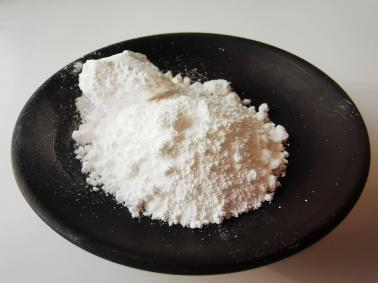
Name: Hyaluronic acid-Polydeoxyribonucleotides (HA-PDRN) Crosslinked Powder
CAS No.: N/A
Purity: 99%
Molecular weight: Sodium hyaluronate (HA, Mw = 1,800,000 g/mol)
Molecular formula: HA-PDRN (Concentration of PDRN (0.1–1.5 %).)
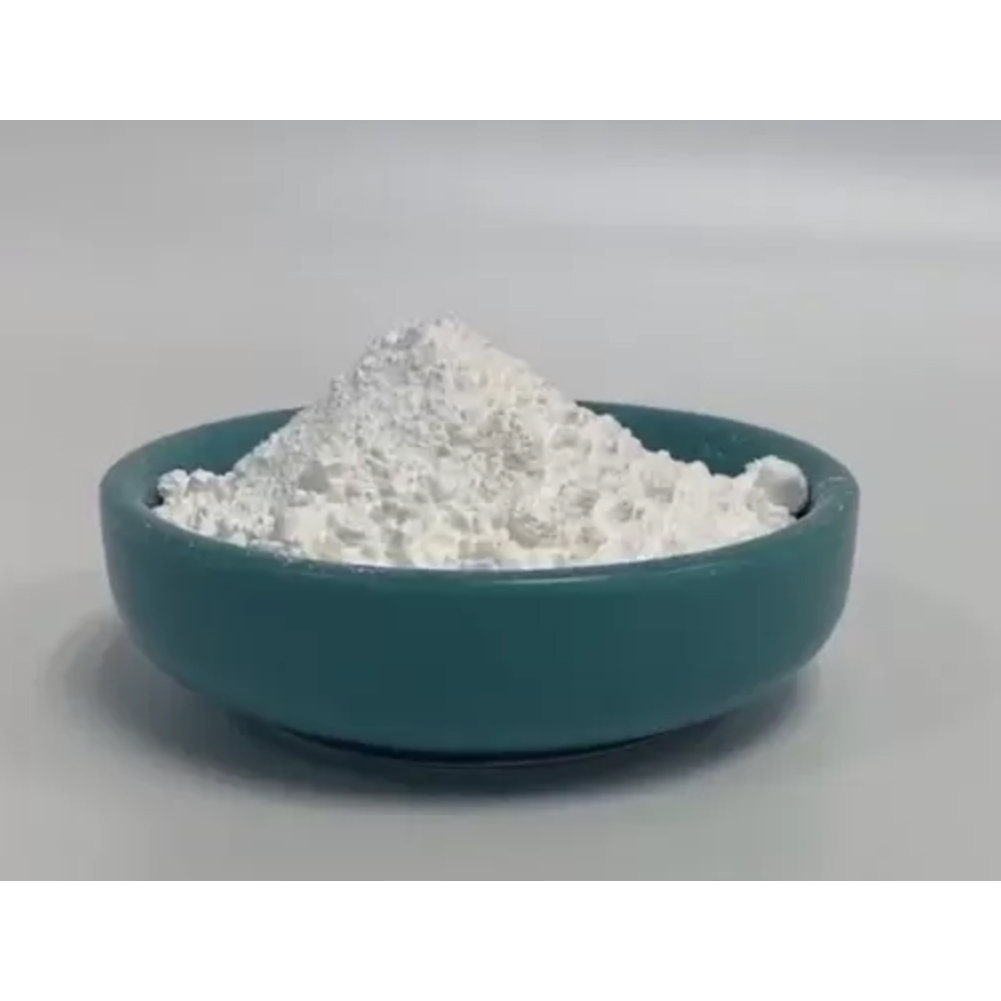
Appearance:White to white crystalline powder or solid
Package: 1g,10g,100g,1000g
Free Sample Quantity: < 100g
Hyaluronic acid-Polydeoxyribonucleotides (HA-PDRN) Crosslinked Powder
Product Details
Assay: 98%
Form:Powder
Color:White
Package:1g,10g,100g,1000g
Storage Temp: -20°C
Leave a Message
We will call you back soon!
Dear,
I am interested in Hyaluronic acid-Polydeoxyribonucleotides (HA-PDRN) Crosslinked Powder, could you send me more details such as type, size, MOQ, material, etc.
Thanks!
Waiting for your reply.
Product Details
Assay: 98%
Form:Powder
Color:White
Package:1g,10g,100g,1000g
Storage Temp: -20°C
Payment & Shipping Terms
Minimum Order Quantity:No limit It ups customers' demand
Price:$20 /g
Packaging Details:Fiber drum 50cm✖60cm✖50cm ziplock bag 1kg, 5kg etc
Delivery Time:4-8 days or within 1 month
Payment Terms:L/C, T/T, Western Union
Supply Ability:30kg/per month
Product Description
An injectable hyaluronic acid-Polydeoxyribonucleotides (HA-PDRN) crosslinked powder as a dermal filler
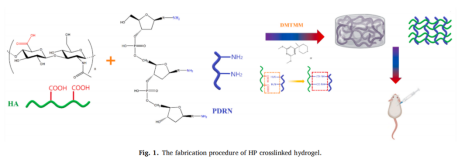
HA-PDRN crosslinked hydrogels were fabricated via covalent interactions between the carboxyl groups of HA and amino groups of PDRN, resulting in desirable properties such as viscoelasticity, appearance, hydration, degradation, injectability, and biocompatibility. In vivo studies on mice revealed that these hydrogels maintain volume for over 24 weeks, with reduced inflammation and enhanced collagen synthesis, as well as exhibiting durability, safety, and supportability (Fig. 1.).
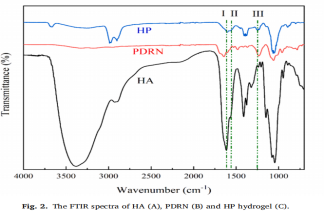
The combined spectra of HA, PDRN, and HP hydrogel are summarized in Fig. 2C. In the HP hydrogel spectrum, the key alterations are observed in the amide I, amide II, and amide III bands. These bands, assigned to the C=O stretching vibration, –CONH- bond vibration, and C-N bond vibration, respectively, appear around 1615, 1540 and 1250 cm− 1 . The absorption intensity of the amide I peak decreases in the HP hydrogel compared to HA, suggesting that the carboxyl groups participated in amide synthesis. Similarly, due to the formation of amide bonds, the absorption intensity of the –NH2 group in PDRN also weakens in the HP hydrogel. Furthermore, increases in the amide II and amide III peaks are connected to the synthesis of –CONH- in the HP hydrogel. These results confirm that the formation of amide band between the carboxyl groups of HA and the amino groups of PDRN is responsible for the fabrication of the crosslinked HP hydrogels (Fig. 2.).
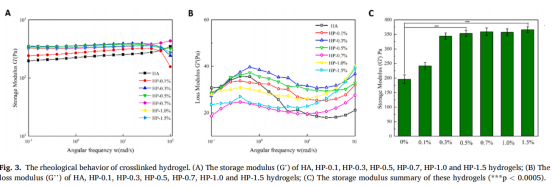
The rheological behavior of crosslinked HP hydrogels was investigated using a strain-controlled rheometer, as illustrated in Fig. 3. shows a significant increase in the storage modulus of HP hydrogel compared to pure HA crosslinked hydrogel, which can be attributed to the presence of PDRN, forming a semi-interpenetrating polymer network.
The morphologies of the lyophilized crosslinked hydrogels were examined using SEM imaging, revealing an interconnected porous network structure in all samples, as shown in Fig. 4. The porous network facilitates cells infiltration and serves as a scaffold to promote resident fibroblast activity and stimulate ECM regeneration pathways. The pore structures of crosslinked HP hydrogels were denser than those of pure HA hydrogel. As the PDRN concentration increased from 0.1 % to 1.5 %, the average pore size of HP hydrogels decreased from 270 ± 100 μm to 85 ± 70 μm, reflecting higher crosslinked density.
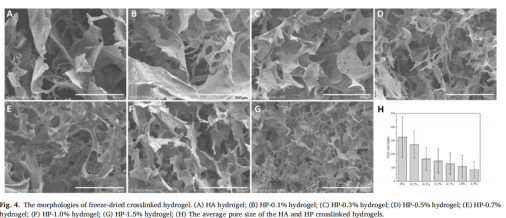
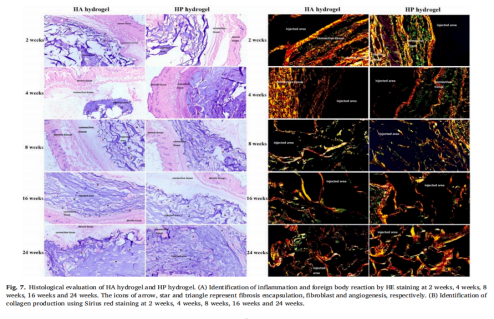
Fig. 7B shows Sirius red staining of the HA and HP crosslinked hydrogel after injection, with type I and type III collagen appearing in brilliant yellow and green under a polarized microscope, respectively. Two weeks post-implantation, type I collagen thickened at the interface between the implanted HP hydrogel and connective tissue. Four weeks later, a modest quantity of collagen was produced and penetrated the periphery of the implant hydrogels, with both type I and type III collagen visible. By 8 weeks, collagen around the implantation region increased, with a higher proportion of type III collagen than type I collagen. The HA pure crosslinked hydrogel exhibited similar behavior over the 8-week implantation period. However, differences emerged at 16 weeks postinjection, with the number of collagen fiber bundles inside the HP hydrogel increasing, expanding, and thickening. The HA hydrogel, in contrast, showed a slight increase in collagen quality, with a higher proportion of type III collagen than type I collagen. By 24 weeks, the HP hydrogel contained more collagen than the HA hydrogel, with thicker collagen fiber bundles and a higher proportion of type I collagen.
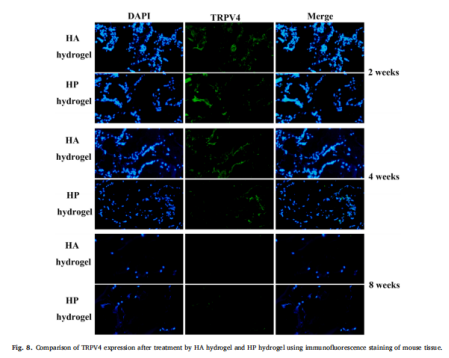
TRPV4 is a calcium-permeable cation channel in the plasma membrane, triggered by chemical and physical stimulation . When skin is stimulated, the expression of matrix metalloproteinases (MMPs) and inflammatory cytokines may rise . Increased MMPs levels result in the degradation of collagen and elastic fibres in the skin, promoting skin aging . In this work, the TRPV4 expression of HA and HP crosslinked hydrogel downregulated over time, with green staining became unnoticeable after 8 weeks (Fig. 8). Compared to HA crosslinked hydrogel, HP crosslinked hydrogel reduced the expression of TRPV4 protein, a neural stimulatory receptor. The inclusion of PDRN resulted in decreased stimulation and lower MMP and inflammatory cytokine expression, showing that HP hydrogel is more effective in inhibiting skin aging.
In summary, The crosslinking degree of HP hydrogel can be regulated by varying the concentrations of HA and PDRN, with HP-0.5% hydrogel identified as the optimal filler for further application. In vitro experiments validated its suitability as a dermal filler based on its appropriate appearance, pH, osmolality, viscoelasticity, biodegradability, and injection force. In vivo studies demonstrated that HP hydrogel effectively promotes volume augmentation for skin rejuvenation through a simple injection approach. These results indicate that HP hydrogels, fabricated by covalent linkages between HA carboxyl groups and PDRN amino groups, have the potential to be employed as effective dermal fillers.
Wu Xi Further Pharmaceutical Co.,Ltd
Main Products
Palmitoylethanolamide(PEA) Micro (CAS 544-31-0)
Spermidine trihydrochloride(CAS 334-50-9)
Pterostilbene(CAS 537-42-8)
Luteolin (CAS 491-70-3)
Voglibose (CAS 83480-29-9) JP GMP
Mailbox:wuxifurther@gmail.com
Whatsapp:+86 18036885286
Recommended Products
 VIEW MORE
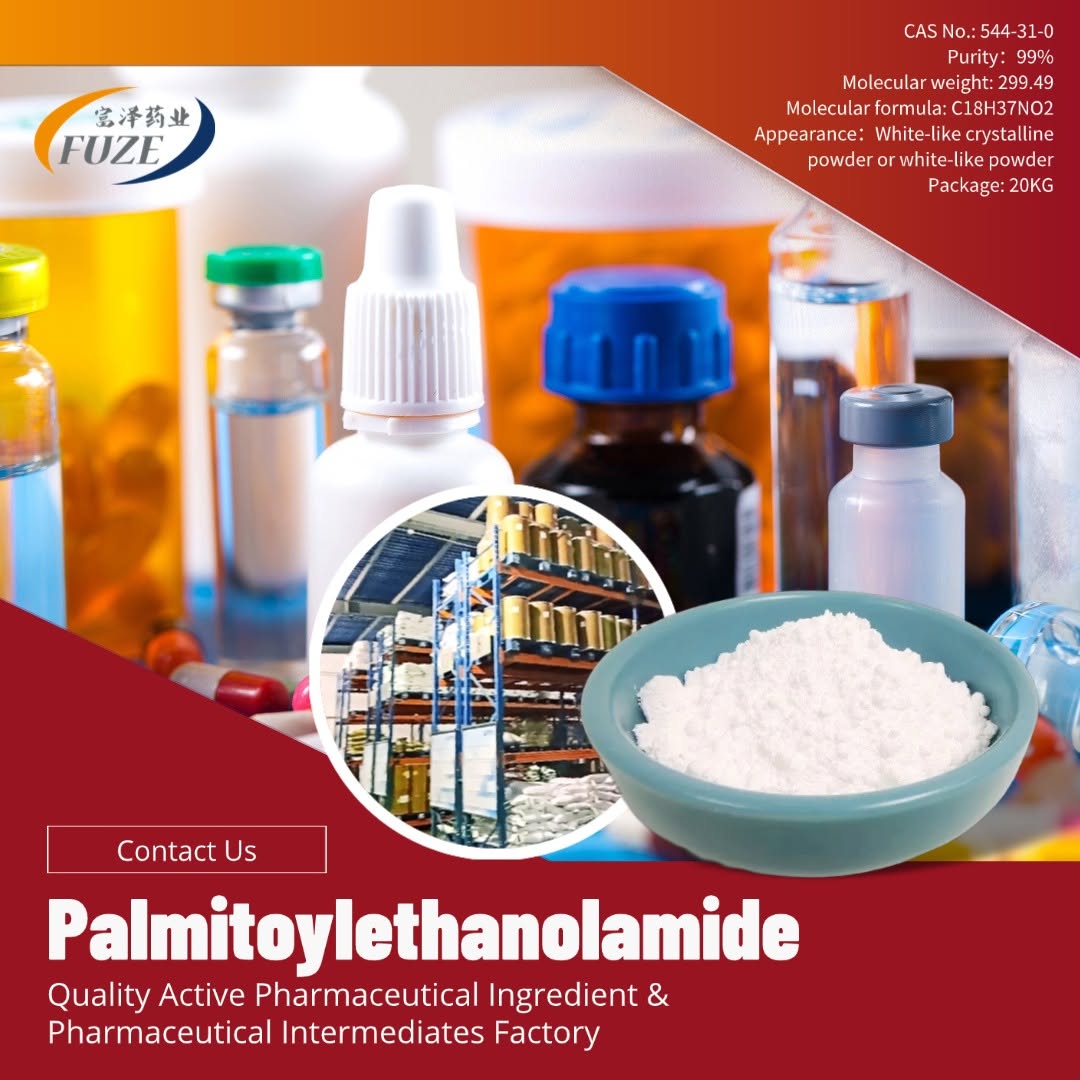
Palmitoylethanolamide granular(PEA)
Palmitoylethanolamide granular(PEA)
Grade: Pharmceutical or Cosmetics
Appearance: white granular powder
MF: C18H37NO2
Specification: Granular
Leave a Message
We will call you back soon!
Dear,
I am interested in Palmitoylethanolamide granular(PEA), could you send me more details such as type, size, MOQ, material, etc.
Thanks!
Waiting for your reply.
 VIEW MORE
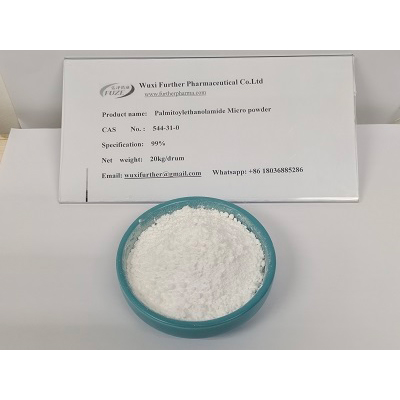
palmitoylethanolamide micronized
palmitoylethanolamide micronized
CAS: 544-31-0
MF: C18H37NO2
Purity: 99%
Package: 20kg/ fiber drum
Micronized fatty acid amide for supporting comfort, healthy inflammatory response, and neurological function
Leave a Message
We will call you back soon!
Dear,
I am interested in palmitoylethanolamide micronized, could you send me more details such as type, size, MOQ, material, etc.
Thanks!
Waiting for your reply.
 VIEW MORE
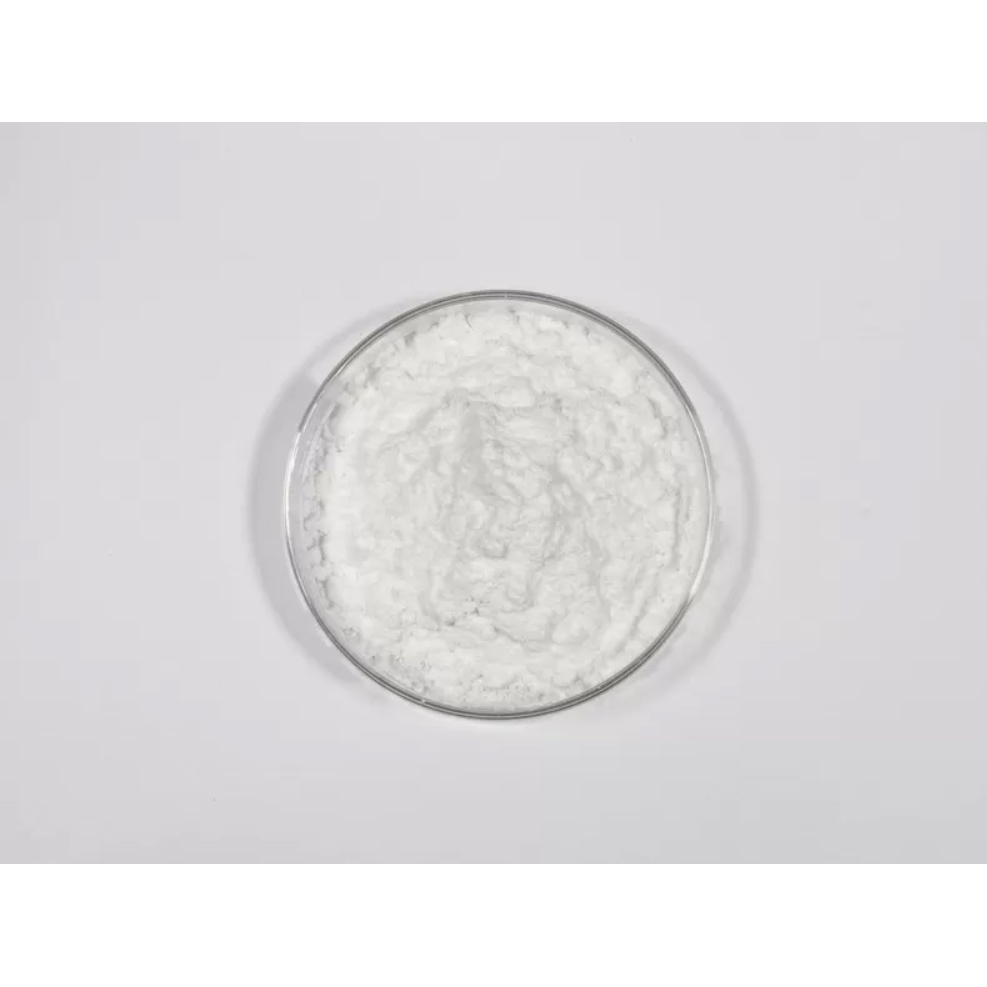
Palmitoylethanolamide Powder
Palmitoylethanolamide Powder
Palmitoylethanolamide
CAS: 544-31-0
MF: C18H37NO2
Purity: 99.9%
Package: 25kg/ fiber drum
Particle Size: less than 40 mesh
Free Sample Quantity: <100g
Appearance:White crystalline powder or white powder
Leave a Message
We will call you back soon!
Dear,
I am interested in Palmitoylethanolamide Powder, could you send me more details such as type, size, MOQ, material, etc.
Thanks!
Waiting for your reply.
 VIEW MORE
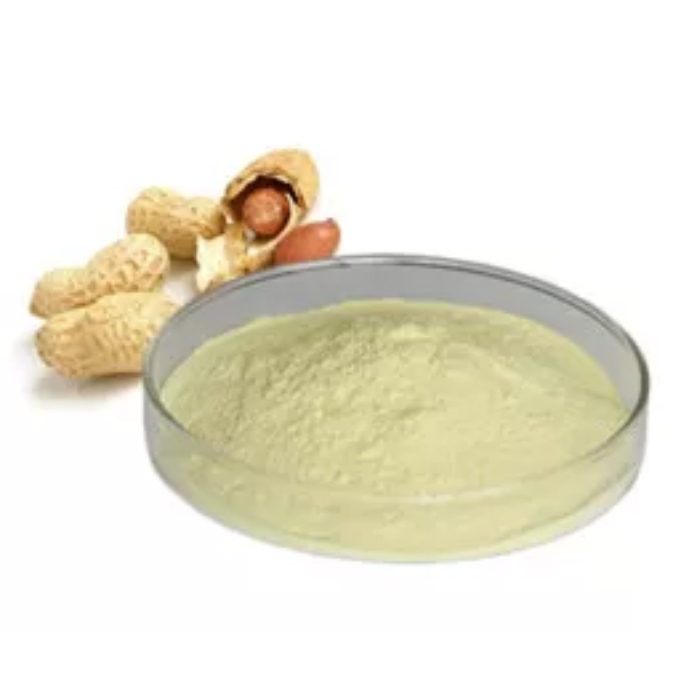
Luteolin Cas 491-70-3 Dietary Flavonoid Antioxidant Anti-Inflammatory Natural Plant Extract Anticanc
Luteolin Cas 491-70-3 Dietary Flavonoid Antioxidant Anti-Inflammatory Natural Plant Extract Anticanc
Color:Yellow
Form:powder
MF:C15H10O6
MW:286.24
Leave a Message
We will call you back soon!
Dear,
I am interested in Luteolin Cas 491-70-3 Dietary Flavonoid Antioxidant Anti-Inflammatory Natural Plant Extract Anticanc, could you send me more details such as type, size, MOQ, material, etc.
Thanks!
Waiting for your reply.
 VIEW MORE
Pterostilbene CAS 537-42-8 Anti-Cancer Anti-Inflammatory Herbal Extract Dietary Supplement
Pterostilbene CAS 537-42-8 Anti-Cancer Anti-Inflammatory Herbal Extract Dietary Supplement
Purity:99% HPLC
MF:C16H16O3
MW:256.3
Stability:Stable for 2 years from date of purchase as supplied. Solutions in DMSO or ethanol may be stored at -20° for up to 1 week.
Leave a Message
We will call you back soon!
Dear,
I am interested in Pterostilbene CAS 537-42-8 Anti-Cancer Anti-Inflammatory Herbal Extract Dietary Supplement, could you send me more details such as type, size, MOQ, material, etc.
Thanks!
Waiting for your reply.
 VIEW MORE
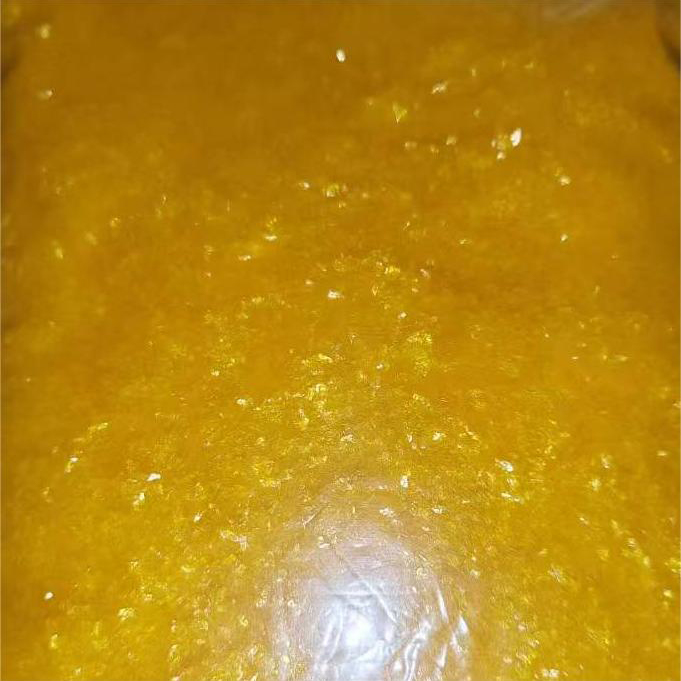
Thymoquinone CAS 490-91-5 Antioxidant Powder Extract Nigella Sativa Anti-Cancer Phytochemical
Thymoquinone CAS 490-91-5 Antioxidant Powder Extract Nigella Sativa Anti-Cancer Phytochemical
Purity:99%,5%,10%
Color and form:Light Orange to Dark Yellow solid
Melting point:45-47 °C(lit.)
Synonym:2-methyl-5-(1-methylethyl)-5-cyclohexadiene-1
Leave a Message
We will call you back soon!
Dear,
I am interested in Thymoquinone CAS 490-91-5 Antioxidant Powder Extract Nigella Sativa Anti-Cancer Phytochemical, could you send me more details such as type, size, MOQ, material, etc.
Thanks!
Waiting for your reply.
 VIEW MORE
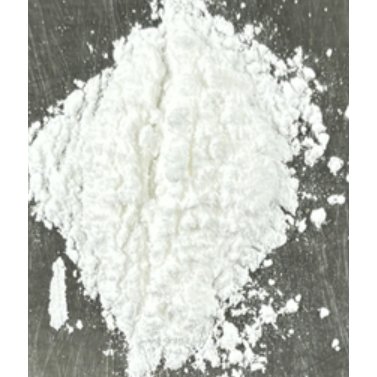
Salidroside
Salidroside
Form:powder
Color:white
Assay:98%
Package:25kg/drum
Leave a Message
We will call you back soon!
Dear,
I am interested in Salidroside, could you send me more details such as type, size, MOQ, material, etc.
Thanks!
Waiting for your reply.
Contact Us at Any Time
86--18036885286
1699 Huishan Avenue, Huishan Economic Development Zone, Wuxi City, Jiangsu Province, China


Send your inquiry directly to us
